



On 29 April, the Russian Science Foundation (RSF) held a press conference at the TASS News Agency to present its Annual Activity Report for 2025 and highlight the scientific achievements of leading Russian researchers supported by RSF grants. The event showcased the Foundation’s contributions to advancing fundamental and applied research, fostering young scientific talent, and strengthening Russia’s technological sovereignty. A video recording of the press conference is available for viewing here, while the full 2025 RSF Activity Report can be downloaded here (in Russian).
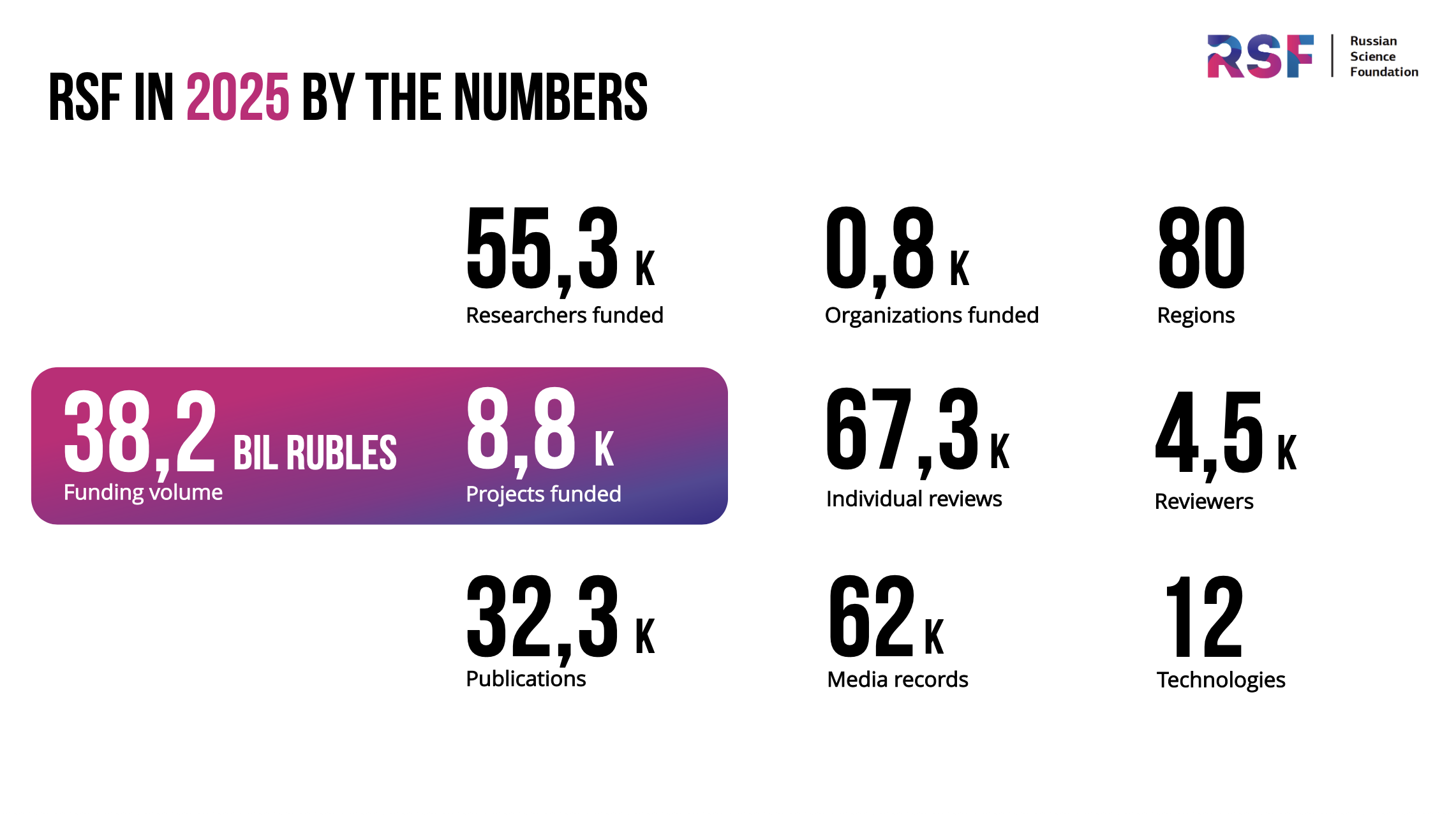
In 2025, the Foundation funded nearly 9,000 research projects across 80 regions of Russia. The projects supported by the Foundation are aligned with the state's priorities for scientific development. One in five scientific and educational organizations in Russia is involved in projects funded by the RSF.
The project results appeared in more than 32,000 peer-reviewed publications during the year, and over 62,000 scientific news stories were published in the media.
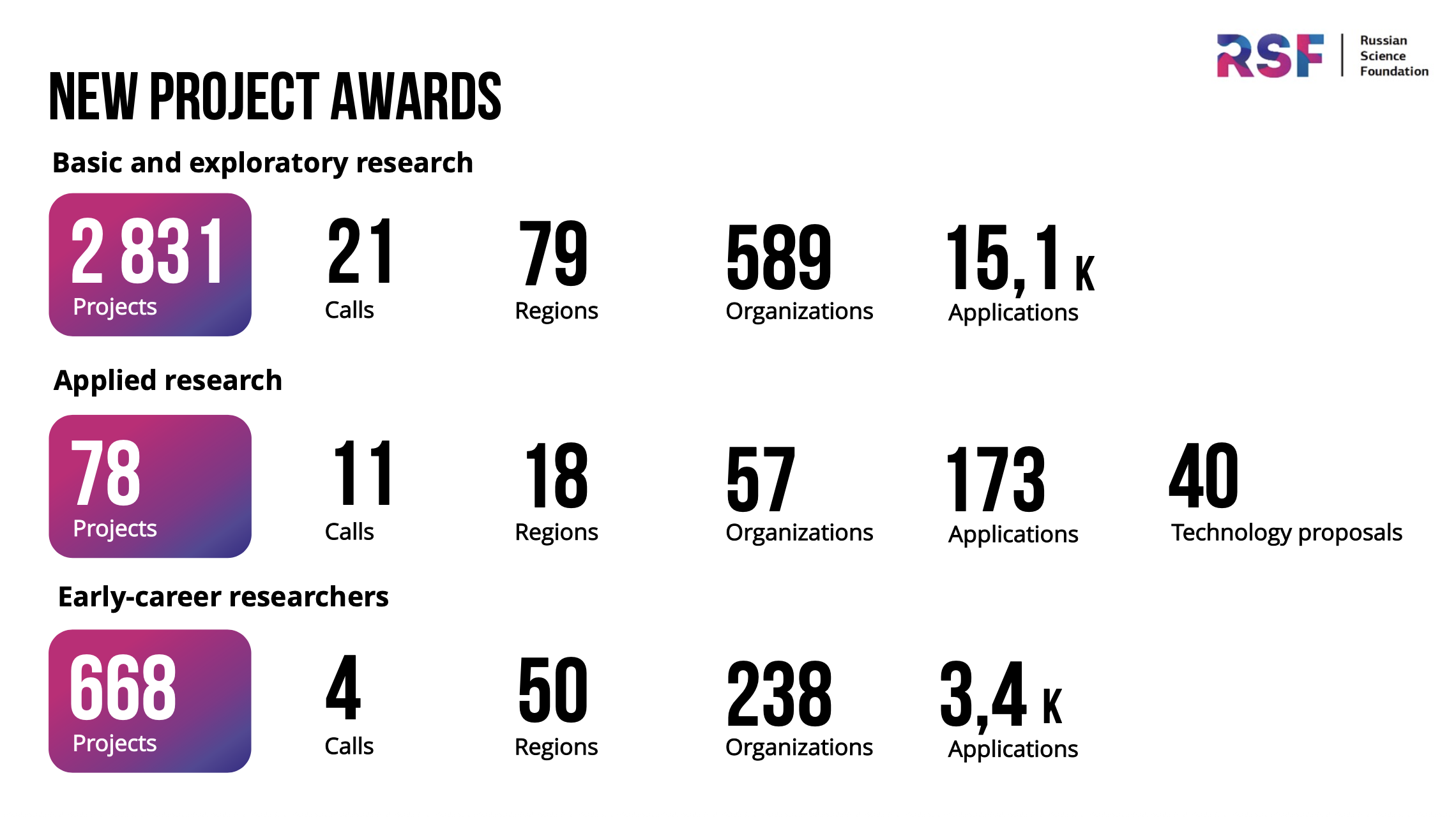
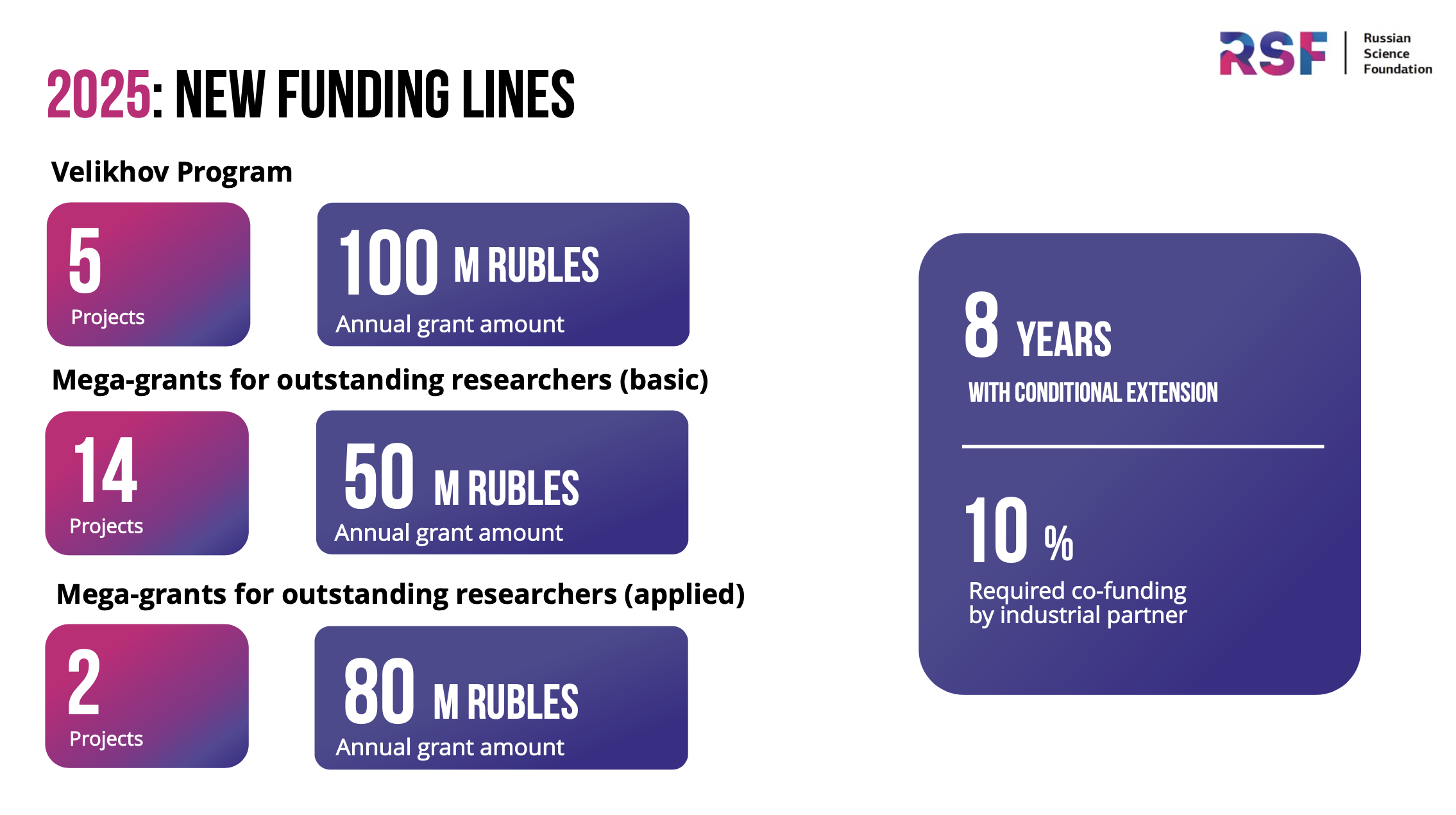
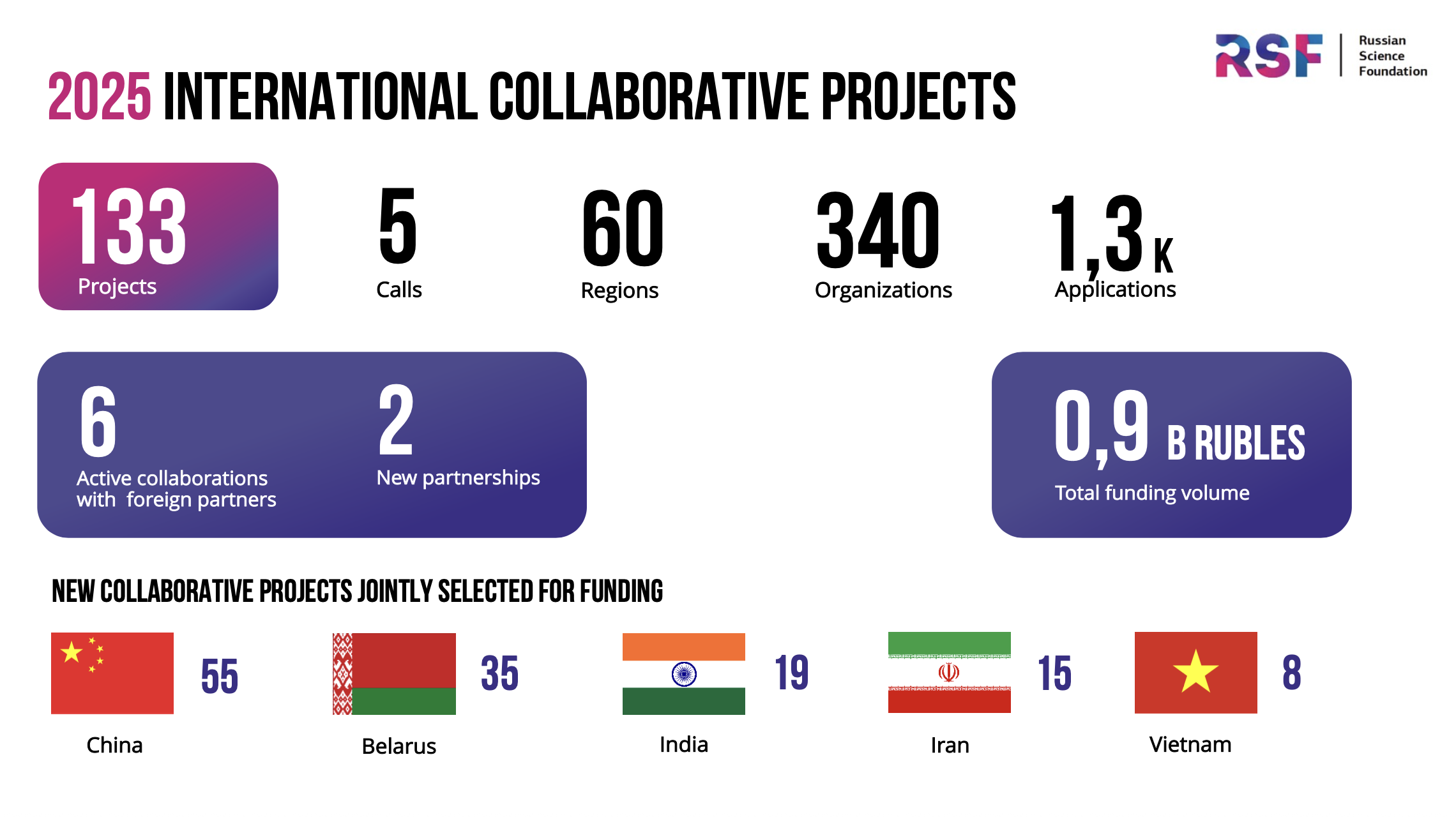
The Foundation's priority remains supporting research initiatives — basic and exploratory research aimed at obtaining and applying new knowledge.
In accordance with the RSF Development Strategy until 2030, the Foundation conducts a competitive selection of projects in three priority areas: support for basic and exploratory research, support for applied research, and support for young scientists.
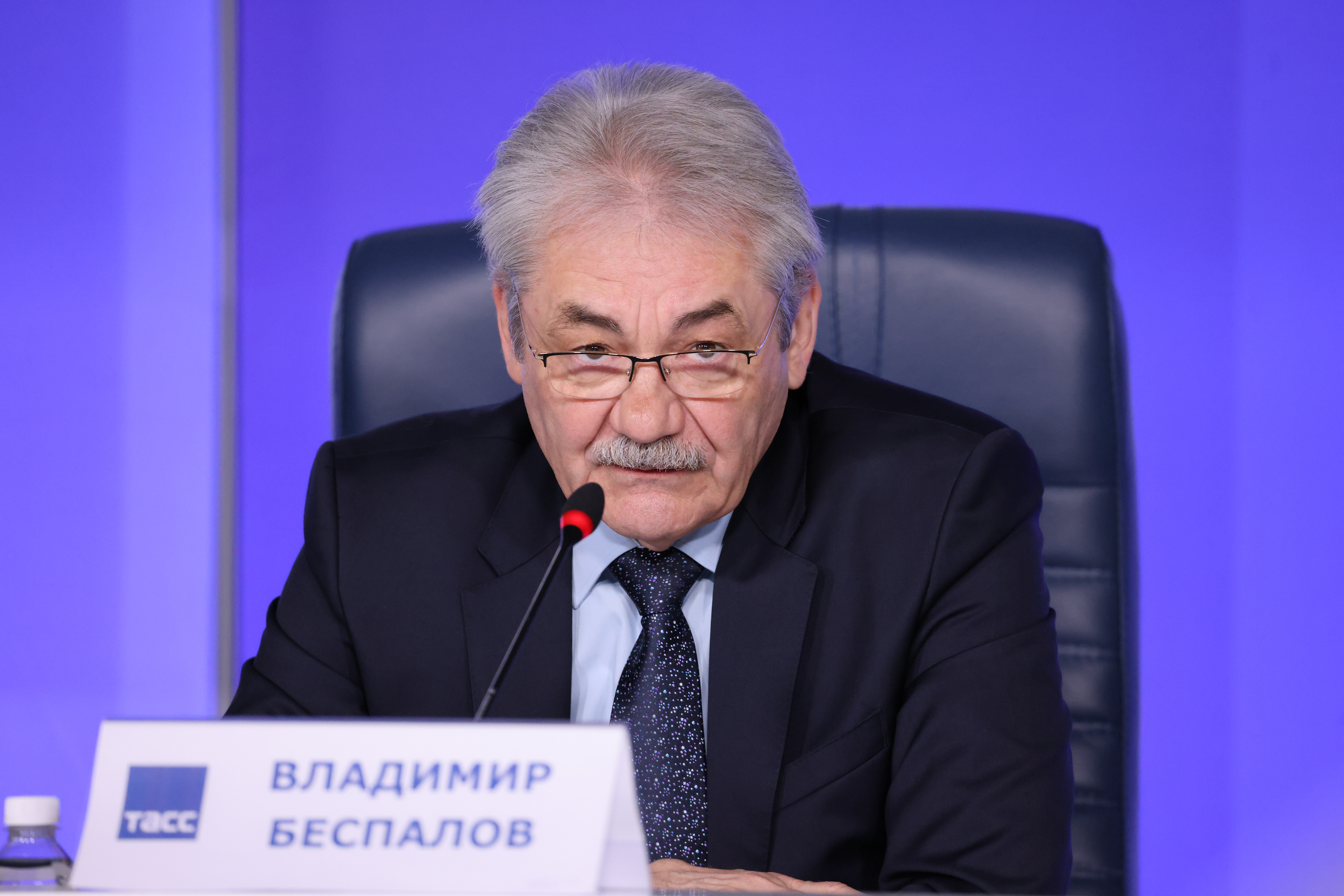
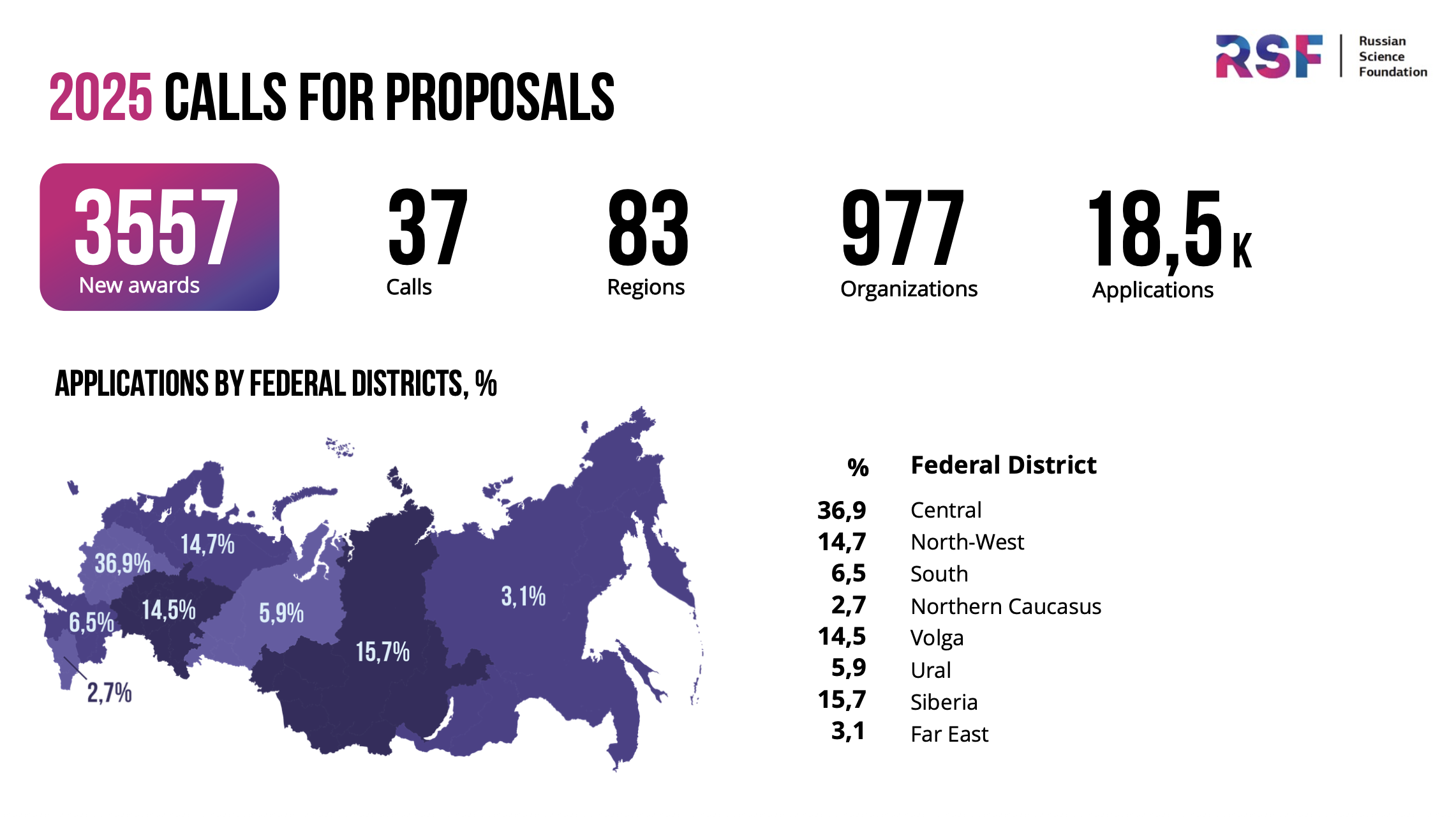
"RSF funding programs are in high demand in the research community. In 2025, over 18,000 applications were submitted under the terms of 36 calls for proposals. Following the evaluation, over 3,500 projects, carried out by organizations in 79 regions of the Russian Federation, were selected for funding. The Foundation's traditional basic research programs will remain in place, and new funding programs will be soon launched, focused more on supporting exploratory and practical research," said Vladimir Bespalov, RSF Director General.
In 2025, the top 10 organizations by number of RSF-funded projects are universities. These include Lomonosov Moscow State University, St. Petersburg State University, Ural Federal University, Moscow Institute of Physics and Technology, the Higher School of Economics, and others.
The Foundation is taking a number of measures to ensure sustainable support and maintain its effectiveness, including: preserving the most effective and in-demand basic research programs and maintaining the level of support for young researchers; focusing supported basic research on solving practical problems; increasing the share of applied projects in the total number of RSF projects; and increasing the volume of funds raised from qualified customers, regions, technology partners, and through government programs.